By Temitayo Gbenro
Capital importation constitutes a critical component of Nigeria’s balance of payments framework. In an open emerging economy characterized by structural FX demand pressures, a narrow export base, and episodic external shocks, foreign capital inflows serve as both a stabilizing instrument and a source of macroeconomic vulnerability.
Within Nigeria’s external sector, capital inflows broadly take three dominant forms:
Each category exhibits distinct risk profiles, transmission mechanisms, and developmental multipliers. Their macroeconomic implications differ materially.
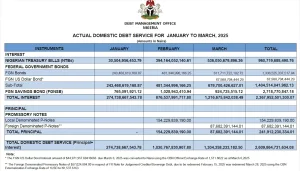
Foreign Portfolio Investment refers to cross-border investments in financial instruments without management control. In Nigeria, this typically includes:
Macroeconomic Transmission Mechanism
FPI primarily influences:
In high-interest-rate environments, such as periods of elevated Monetary Policy Rate (MPR), Nigeria becomes attractive to yield-seeking global capital. This creates short-term FX inflows, strengthens reserves, and temporarily stabilizes the naira.
Structural Limitations
However, FPI is inherently pro-cyclical and highly sensitive to:
Sudden reversals (“capital flight”) can:
FPI enhances liquidity but does not expand productive capacity. Its developmental elasticity is limited.


Foreign Direct Investment involves long-term capital committed to physical assets or controlling stakes in enterprises. Unlike portfolio flows, FDI reflects confidence in structural fundamentals rather than short-term yield arbitrage.
Developmental Channels
FDI contributes to:
For Nigeria, sectoral distribution is critical. FDI concentrated in extractive industries (e.g., crude oil) has historically produced enclave growth with limited spillovers. In contrast, FDI in:
generates broader value-chain multipliers.
Stability Profile
FDI is relatively inelastic to short-term shocks because it involves sunk costs. It is therefore:
In long-term growth modeling, FDI is positively correlated with total factor productivity (TFP) improvements.


Remittances are unilateral transfers from Nigerians abroad to domestic households. Nigeria remains one of Africa’s largest recipients of diaspora flows.
Macroeconomic Effects
Remittances influence:
Unlike FPI, remittances are counter-cyclical: they often increase during domestic economic stress.
However, their macroeconomic multiplier depends on utilization patterns. If predominantly consumption-driven without corresponding domestic supply expansion, remittances may:
They are socially stabilizing but not inherently industrializing.
Comparative Economic Characteristics
| Variable | FPI | FDI | Remittances |
| Volatility | High | Low | Low–Moderate |
| Time Horizon | Short | Long | Continuous |
| FX Impact | Immediate, reversible | Stable | Stable |
| Productive Capacity | Minimal | High | Indirect |
| Employment Impact | Limited | Direct | Indirect |
| Policy Sensitivity | High | Moderate | Low |
From a macro-structural standpoint, the optimal capital structure for Nigeria would prioritize FDI and stable remittance flows while minimizing excessive dependence on speculative portfolio capital.
Dutch Disease Risk
Conceptual Framework
Dutch Disease describes a structural macroeconomic distortion whereby large foreign currency inflows, typically from natural resource exports or capital surges, lead to real exchange rate appreciation, thereby undermining the competitiveness of non-resource tradable sectors.
The term originated from the Netherlands’ post-1960s natural gas boom but is applicable to resource-dependent economies such as Nigeria.
Mechanism of Transmission
The process unfolds in three stages:
This may arise from:
Increased FX supply strengthens the domestic currency in real terms. This can occur via:
Capital and labor migrate toward:
Meanwhile:
lose competitiveness due to higher production costs relative to global peers.
Nigerian Context
Nigeria’s heavy dependence on crude oil exports makes it structurally susceptible to Dutch Disease dynamics.
When oil prices are elevated:
Consequently:
This dynamic entrenches mono-product dependence.
Conversely, during oil price downturns:
The economy experiences asymmetric volatility: boom-driven distortion followed by bust-driven instability.
Capital Importation and Dutch Disease
Large portfolio inflows can replicate Dutch Disease effects even outside commodity booms. For example:
Similarly, remittance surges without supply-side expansion can intensify import consumption and widen current account pressures.
Thus, capital inflows — if not sterilized or productively allocated, may create exchange rate misalignment and structural de-industrialization.
Policy Mitigation Strategies
To mitigate Dutch Disease risks, Nigeria must:
Conclusion
Capital importation is not inherently growth-inducing. Its developmental outcome depends on:
For Nigeria, sustainable economic transformation requires a strategic pivot from volatile financial inflows toward productivity-enhancing investment.
Absent structural reforms, capital inflows may temporarily strengthen macro indicators while simultaneously deepening long-run fragility.
The central macroeconomic imperative is therefore compositional optimization, attracting capital that builds productive capacity rather than capital that merely circulates within financial markets.
Written By,
Temitayo Gbenro,